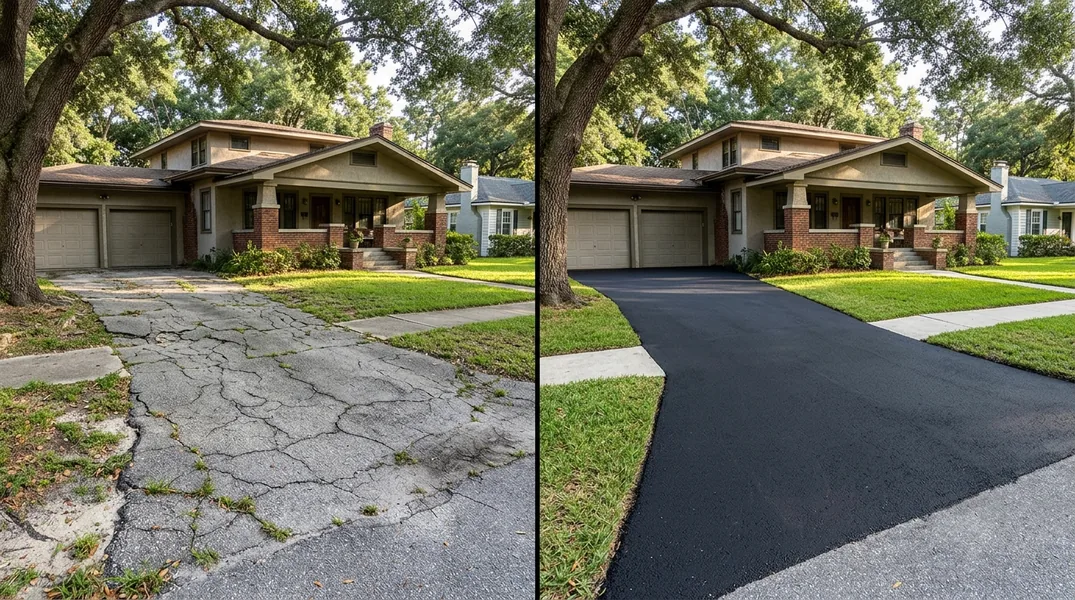
Understanding Jacksonville's Hardpan Soil Challenge
If you own property in Jacksonville, you've likely heard about hardpan. This dense, compacted layer of clay and soil sits beneath much of Northeast Florida and creates unique challenges for driveway installation and maintenance. Hardpan doesn't drain water effectively, which means any surface you install on top of it must be able to handle moisture buildup and potential shifting over time.
When deciding between asphalt and concrete for your driveway, understanding how each material interacts with hardpan is critical. The soil beneath your driveway plays just as important a role as the surface material itself. Poor drainage and soil movement can cause premature failure, cracking, and expensive repairs. This is why many homeowners in Jacksonville struggle with driveway problems within just a few years of installation. The real question isn't just which material is better in general, but which one performs better specifically on hardpan soil.
Asphalt Driveway Performance on Hardpan Soil
Asphalt Driveway Paving & Installation has proven to be more forgiving on hardpan than many homeowners expect. Asphalt's flexibility is actually an advantage when dealing with soil movement and moisture issues. Because asphalt can expand and contract slightly with temperature changes and ground shifting, it's less likely to develop the severe cracking that plagues rigid surfaces. In Florida's hot, humid climate, this flexibility helps the material adapt to the constant stress of moisture and heat cycles.
The blacktop driveway is also more permeable than concrete, which helps with drainage concerns. While this might seem counterintuitive, asphalt's porous nature allows water to move through the surface more readily, reducing the pooling and standing water that can weaken the base layer. However, this also means that asphalt requires more regular maintenance to keep it in top condition. The asphalt driveway lifespan in Jacksonville typically ranges from 15 to 20 years with proper care, though hardpan conditions may reduce this somewhat if drainage isn't managed well.
Concrete Driveways and Hardpan: A Problematic Combination
Concrete and hardpan don't always make the best partners. Concrete is a rigid material that cannot flex with soil movement, and when hardpan shifts or settles unevenly, concrete cracks. These aren't small hairline fractures either; hardpan-related concrete failure often shows up as large, jagged cracks that spread quickly and are expensive to repair. The moisture retention problem is even worse with concrete because water sits on top of the surface longer, seeping into cracks and weakening the subbase.
One of the biggest issues with concrete on hardpan is that once significant cracking begins, it's difficult to stop. Unlike asphalt, which can be sealed and patched relatively easily, concrete repair often requires full-section replacement. This makes the long-term cost of maintaining a concrete driveway on hardpan potentially much higher than asphalt. Many homeowners in Jacksonville have discovered this the hard way after investing in what they thought would be a low-maintenance concrete surface.
Asphalt Over Concrete Driveway: When This Makes Sense
Some homeowners wonder whether they can place asphalt over an existing concrete driveway, and the answer depends on the condition of that concrete. If the concrete is in relatively good shape with only minor surface wear, Asphalt Resurfacing & Overlay can be a cost-effective solution. This approach involves laying a new asphalt layer over the concrete base, essentially giving your driveway a fresh surface without the expense of complete removal and replacement.
However, if your concrete has significant cracks or has already begun to fail due to hardpan issues, laying asphalt over it is usually not recommended. The underlying concrete problems will eventually transfer through the new asphalt layer, a phenomenon called reflective cracking. The best approach is to have a professional assess your existing driveway. Jacksonville Asphalt Paving can evaluate whether overlay is viable for your specific situation or if removal and new installation is the smarter investment. Contact us at (904) 569-5441 for a professional assessment of your current driveway condition.
Cost Comparison: Asphalt vs. Concrete on Hardpan
When comparing initial installation costs, concrete typically appears cheaper upfront. However, this initial savings can disappear quickly when you factor in hardpan-related problems and repairs. Asphalt generally costs less per square foot for installation, but requires more frequent maintenance like seal coating and crack sealing to extend its life. Concrete requires less regular maintenance but costs significantly more when major repairs become necessary.
Over a 20-year period, the total cost of ownership often favors asphalt in hardpan areas. You'll spend money on regular maintenance like seal coating every two to three years, but you'll avoid the expensive emergency repairs that concrete often requires. If you'd like to understand the specific pricing for your driveway project, Jacksonville Asphalt Paving provides transparent estimates based on your soil conditions, driveway size, and material choice. We recommend getting multiple quotes to understand the full financial picture.
Proper Installation and Drainage: The Real Key to Success
Regardless of whether you choose asphalt or concrete, proper installation is what determines long-term success on hardpan. The foundation matters more than the surface material itself. This means ensuring adequate base preparation, proper grading for water drainage, and potentially installing drainage solutions if your property has severe hardpan issues. A poorly installed asphalt driveway will fail just as quickly as poorly installed concrete.
Jacksonville Asphalt Paving understands the unique challenges of hardpan soil and designs installations accordingly. We focus on proper base preparation, correct slope for drainage, and material selection based on your specific soil conditions. Whether you need a new Asphalt Driveway Paving & Installation or repairs to an existing surface, our team has the local expertise to handle hardpan challenges. If you're dealing with driveway problems or planning a new installation, reach out for a free estimate today. We'll assess your soil conditions and recommend the best solution for your property.
Looking for a professional asphalt paving contractor in Jacksonville? Jacksonville Asphalt Paving responds fast for all your asphalt paving needs.
Get a Free Quote