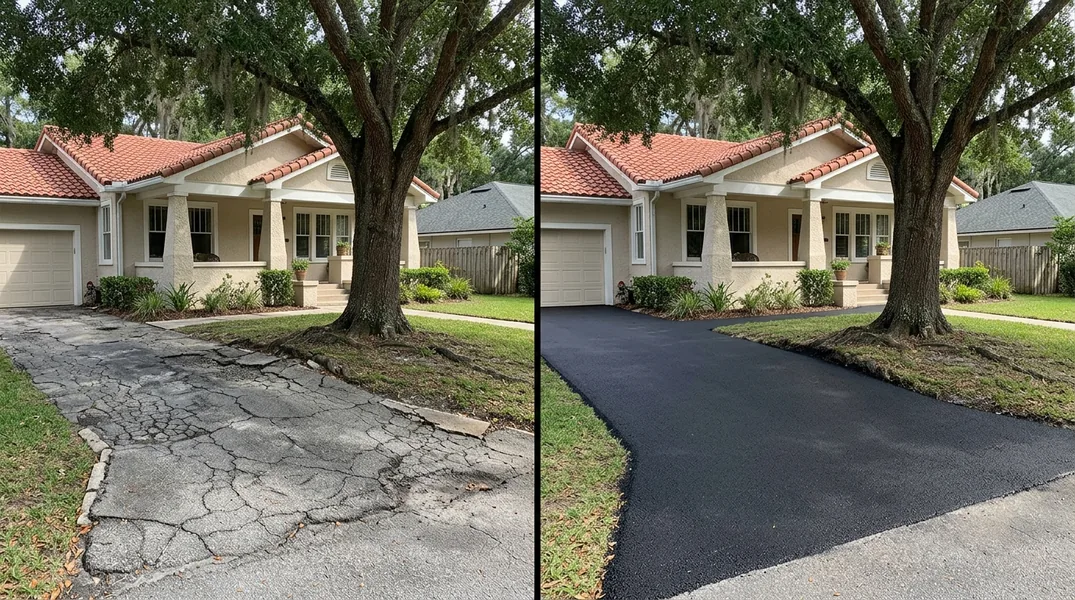
The Challenge of Paving Driveways Around Established Oak Trees
Riverside and Avondale are known for their mature, canopy-covered neighborhoods where towering oak trees define the landscape and character of these historic Jacksonville communities. While these trees provide shade, aesthetic appeal, and environmental benefits, they present a genuine challenge for homeowners planning Asphalt Driveway Paving and Installation projects. Oak roots, particularly in older neighborhoods, often extend across driveways and yards, creating uneven surfaces, heaving, and structural damage that makes a simple paving job far more complex than it appears.
When you have a short driveway in these tree-rich areas, the stakes feel even higher. A small driveway may seem like a straightforward project, but root systems underneath can turn it into a puzzle that requires careful planning and expert knowledge. The roots don't just cause cosmetic issues, either. Over time, they lift and crack asphalt, creating conditions that accelerate deterioration and make your driveway unsafe. Understanding how to work with these natural obstacles is the first step toward a lasting solution.
Understanding Alligator Cracking and Root-Related Asphalt Damage
One of the most telltale signs of oak root damage is alligator cracking, which appears as a web of interconnected cracks that resemble the scales of an alligator's skin. This pattern typically develops when tree roots push upward against the asphalt from below, creating stress points that eventually fracture the surface. In Jacksonville's humid subtropical climate, where moisture encourages aggressive root growth, alligator cracking can develop surprisingly quickly, especially on short driveways where the root pressure is concentrated in a smaller area.
Unlike isolated potholes or minor surface wear, alligator cracking indicates structural failure beneath the surface. When you see this pattern, it means the asphalt has lost its integrity and water is infiltrating the base layers, accelerating the damage cycle. This is why prompt attention matters. The good news is that Jacksonville Asphalt Paving can assess whether your driveway needs Driveway Repair through patching or whether a more comprehensive solution is necessary. Ignoring alligator cracking will only lead to costlier repairs down the road.
Asphalt Overlay vs. Replacement: Which Option Works for Root Damage
When faced with a damaged short driveway in Riverside or Avondale, homeowners often wonder whether they should opt for an overlay or a full replacement. The answer depends heavily on the extent of root damage and the condition of the base layers. Asphalt Resurfacing and Overlay involves applying a new layer of asphalt over the existing surface, which can be an effective solution when the base is still structurally sound and the damage is primarily surface level. However, with tree root issues, overlays come with an important caveat: they do not solve the underlying problem.
If oak roots are actively heaving and cracking your driveway, an overlay may only buy you a few years before the same roots push through the new layer and create fresh damage. This is especially true for short driveways, where concentrated root pressure can be more intense. A full replacement, by contrast, addresses the problem more comprehensively. During replacement, a professional crew can excavate the old asphalt, assess and manage the root situation, properly prepare and compact the base, and install new asphalt with better longevity. While replacement costs more upfront, it often provides better long-term value for properties with significant root interference. Jacksonville Asphalt Paving can evaluate your specific situation and recommend the approach that makes the most sense for your home.
Driveway Replacement Cost in Jacksonville: What to Budget for Root-Affected Properties
Understanding pricing is crucial when planning a driveway project, especially in areas where tree roots complicate the work. The cost of asphalt driveway replacement varies based on several factors: the size of your driveway, the severity of existing damage, the depth of root systems that need to be managed, and the condition of the base materials. For a short driveway in Riverside or Avondale, you might expect a full replacement to range from several hundred to several thousand dollars, depending on these variables. Properties with extensive root systems or poor base conditions will naturally cost more because the contractor must spend additional time on site preparation and root management.
An Asphalt Resurfacing and Overlay project, by contrast, typically costs less because it requires less labor and material. However, remember that this savings may be temporary if roots continue to cause problems. When budgeting for your project, it's wise to get a detailed estimate that accounts for the root situation at your property. Jacksonville Asphalt Paving offers transparent free estimate consultations where a professional can walk your driveway, identify root issues, and provide accurate pricing based on what your specific property needs. This takes the guesswork out of planning and helps you make an informed decision.
Best Practices for Paving Short Driveways Near Mature Trees
If you decide to move forward with a paving project, several best practices can help ensure the best possible outcome in a tree-rich neighborhood. First, timing matters. Paving during drier months, when soil moisture is lower and root activity is slightly reduced, can make the job easier and help the asphalt cure properly. Second, work with a contractor who understands local soil and vegetation conditions. Jacksonville's clay-heavy soils and the aggressive root systems of mature oaks require specific knowledge that a local company like Jacksonville Asphalt Paving brings to every project.
Third, consider root barriers or management strategies if appropriate for your property. In some cases, a contractor can install root barriers or carefully manage roots during excavation to reduce future heaving. Fourth, ensure proper drainage and base preparation. A well-compacted base and proper grading help water drain away from the asphalt, reducing the conditions that encourage root growth and moisture infiltration. Finally, plan for maintenance. Even with expert installation, a driveway in a tree-heavy area benefits from regular seal coating and prompt repair of any emerging cracks. These practices extend the life of your asphalt and catch problems before they become expensive.
Getting Professional Help: Asphalt Driveway Paving and Installation Near Me
If you're a homeowner in Riverside, Avondale, or anywhere across Jacksonville dealing with a damaged short driveway surrounded by oak trees, professional guidance is invaluable. Trying to DIY asphalt work or hiring an inexperienced contractor can result in poor compaction, inadequate root management, and a driveway that fails quickly. Jacksonville Asphalt Paving has years of experience working in Jacksonville's tree-covered neighborhoods and understands the unique challenges that oak roots and local soil conditions present.
The team can assess whether your driveway needs Pothole Repair and Asphalt Patching to extend its life or whether a full overlay or replacement is the better path forward. They'll explain your options clearly, provide detailed estimates, and execute the work with attention to both immediate results and long-term durability. If you're ready to address your driveway, contact Jacksonville Asphalt Paving today at (904) 569-5441 or visit the website to request a free estimate. A professional assessment will give you the clarity and confidence to move forward with the right solution for your home.
Looking for a professional asphalt paving contractor in Jacksonville? Jacksonville Asphalt Paving responds fast for all your asphalt paving needs.
Get a Free Quote